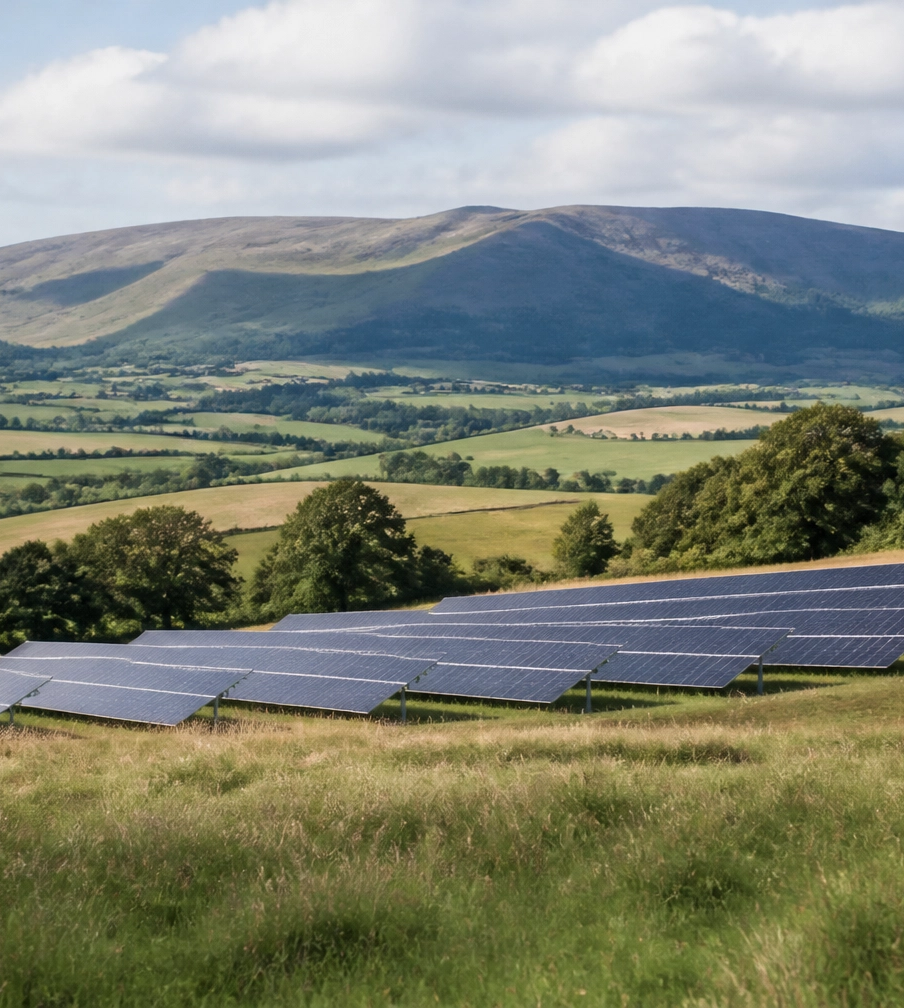
For farmers and landowners across Perthshire, leasing land for a commercial solar farm can look like an attractive way to diversify a rural business. However, a solar farm is a long-term land-use decision. It involves planning, grid capacity, agricultural considerations, environmental surveys, lease negotiations and eventual decommissioning.
This guide explains the main points to consider before speaking to a solar developer. It is intended as general information, not legal, financial, tax or planning advice.
Get in touch if you want to find out more.
Farm rooftop solar or a commercial solar farm?
The first step is understanding the difference between two very different types of project.
Rooftop solar for your farm
A farm’s own solar system is usually installed on agricultural buildings, workshops, grain stores, sheds or barns. The electricity is primarily used by the farm, with surplus potentially exported to the grid.
A rooftop system may help reduce electricity bought from the grid, particularly for farms using refrigeration, pumps, lighting, milking equipment, ventilation or processing machinery. Battery storage can also help a business use more of its own solar electricity at different times of day.
You can learn more about commercial solar services from Herofix or explore the company’s solar panel solutions.
A utility-scale ground-mounted solar farm
A commercial solar farm is a much larger development. It normally includes:
- Ground-mounted solar arrays
- Inverters and transformers
- Fencing and security systems
- Internal tracks and maintenance access
- Cabling and a substation
- Potentially battery storage
- Drainage and landscaping works
The electricity is generated for export through the electricity network rather than mainly for use in your farmhouse or buildings. The developer normally leads the planning and grid process, while the landowner considers whether the lease terms and long-term land-use change are suitable.
What land is suitable for a solar farm in Perthshire?
There is no single checklist that guarantees a site will be suitable. Developers usually begin with a desktop assessment, followed by technical surveys.
They may look at:
- The total area and whether it forms one reasonably practical block
- Slope, orientation and ground conditions
- Flood risk and drainage
- Access for construction and maintenance vehicles
- Distance from houses, roads and sensitive viewpoints
- Proximity to a suitable electricity connection
- Agricultural land quality
- Nature, heritage and landscape designations
- Existing rights of way, tenancies and land management schemes
Searches for solar farm land requirements UK often suggest that developers may look for several dozen acres, although the actual area depends on the proposed capacity, layout, grid offer and site constraints. A smaller site can sometimes be viable, while a larger site may not proceed if the grid connection is unavailable or the landscape impact is unacceptable.
Land around the Carse of Gowrie, Coupar Angus, Blairgowrie and Meigle may have very different characteristics from more elevated or visually exposed areas near Dunkeld, Aberfeldy or Highland Perthshire. The same is true around Kinross, Crieff and Auchterarder. A site assessment must consider the individual location rather than relying on a general rule about Perthshire.
Grid capacity may decide whether the project proceeds
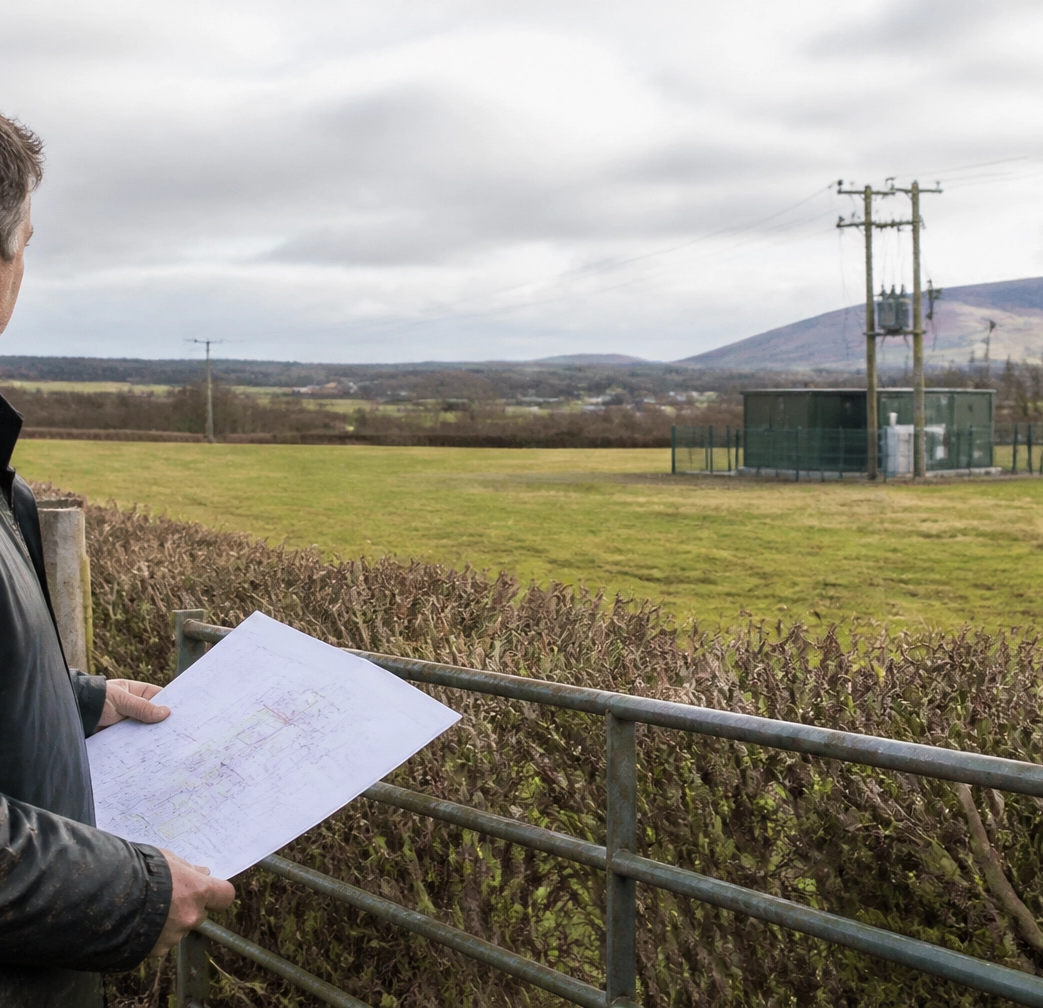
A solar developer needs a viable route to export electricity. Being close to a substation or overhead line can help, but visible infrastructure does not automatically mean there is spare capacity.
The developer will usually investigate:
- The nearest suitable point of connection
- Available export capacity
- Required network reinforcement
- Connection costs
- Delivery timescales
- Curtailment or flexible connection arrangements
- Land rights needed for underground cables or other infrastructure
The developer normally applies to the relevant Distribution Network Operator, or DNO. Depending on the exact location, this may involve SSEN or SP Energy Networks. The developer may ask you to sign a letter of authority so it can make enquiries and submit a connection application.
A connection offer should be treated as a key project milestone, not a formality. Ask what happens if the offer is delayed, too expensive, heavily constrained or withdrawn. You should also understand whether any cable route or substation would cross other parts of your holding.
The SP Energy Networks distributed generation information provides useful background, but the relevant DNO should be confirmed for the specific site.
Agricultural land and soil quality
One of the most sensitive issues in a proposed solar farm is the use of agricultural land, particularly prime agricultural land.
Scotland’s National Planning Framework 4 supports renewable energy, including solar arrays. It also includes policies relating to soils and prime agricultural land. Renewable energy development can be considered on prime agricultural land, but proposals are expected to minimise the amount of protected land used and provide secure arrangements for restoration.
This does not mean that a solar farm on agricultural land will automatically receive approval. Planning decisions depend on the details of the proposal and the current Scottish planning policy framework.
The developer may need to assess:
- Agricultural land classification
- Soil structure and fertility
- Peat or carbon-rich soils
- Soil compaction during construction
- Erosion and run-off
- Construction traffic and working areas
- Restoration methods after decommissioning
You should ask whether the panels would prevent all farming activity or whether sheep grazing could continue. Grazing arrangements must be clearly agreed rather than assumed.
Biodiversity, drainage and landscape impact
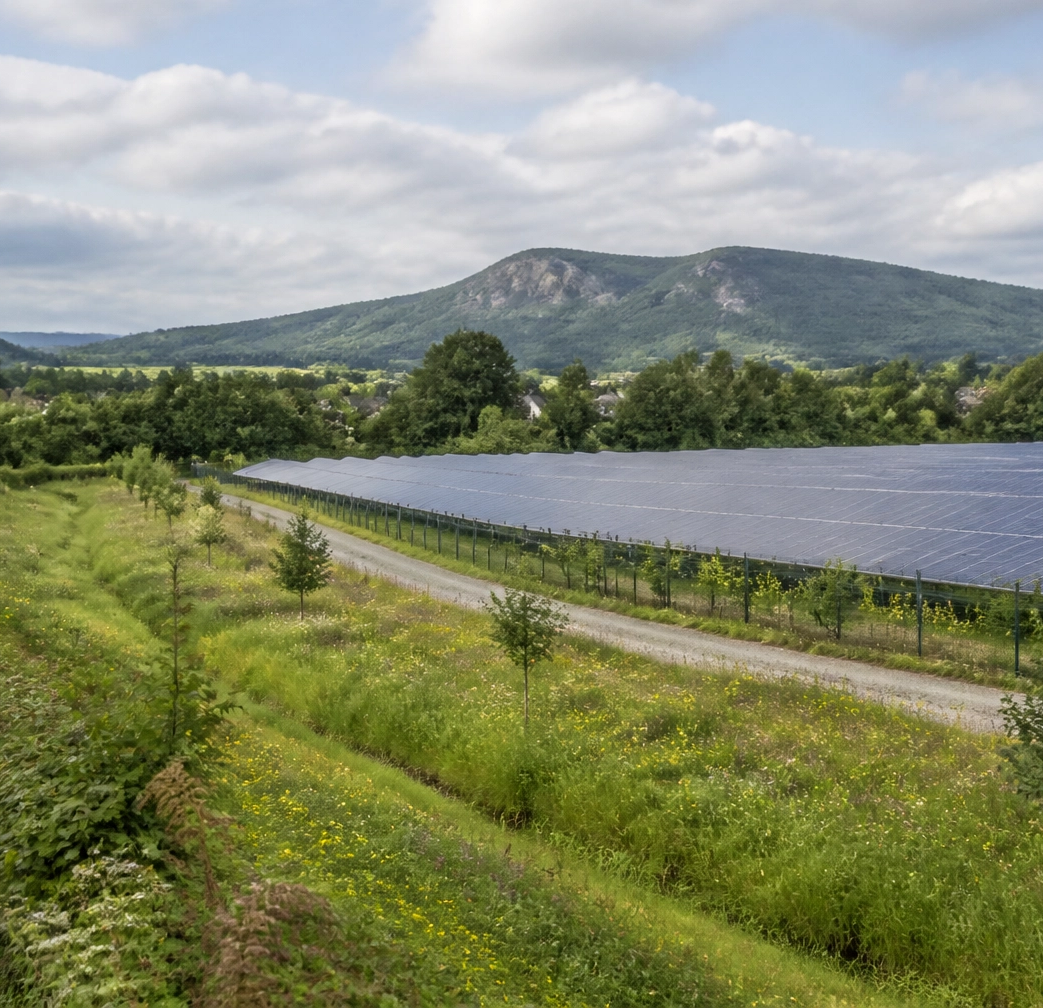
A well-designed project may include habitat improvements, but biodiversity measures should be specific and properly managed. Possible measures include:
- New or enhanced hedgerows
- Wildflower margins
- Grassland management
- Pollinator habitats
- Wildlife corridors
- Native tree or shrub planting where appropriate
- Wetland or drainage features
For major developments, Scotland’s planning policy expects the applicant to understand the site’s ecological context, avoid or reduce harm and provide appropriate biodiversity enhancement.
Drainage is particularly important in farmland. A proposal should explain how rainfall will be managed without increasing flood risk or causing problems for neighbouring fields, roads, watercourses or properties.
Landscape and visual impact may be a major concern in open countryside. Developers may use existing hedges, landform and woodland for screening, while also leaving suitable distances from roads, homes and important viewpoints. They may prepare photomontages or other visualisations so that residents and planning officers can understand the likely appearance.
Solar farm planning permission in Scotland
Do solar farms need planning permission in Scotland? In most cases, a sizeable ground-mounted solar farm will require planning permission or another formal consenting route.
The exact route depends on the scale, generating capacity and associated infrastructure. Perth & Kinross Council is the relevant planning authority for many solar farm proposals across the area. Its renewable energy planning process and Renewable and Low Carbon Energy Supplementary Guidance should be checked for current requirements.
The council may consider:
- Landscape and visual effects
- Agricultural land and soil quality
- Biodiversity and protected species
- Drainage, hydrology and flood risk
- Glint and glare
- Construction traffic and access
- Residential amenity
- Historic buildings and archaeology
- Public access and rights of way
- Aviation, telecommunications and defence interests
- Cumulative effects from other developments
- Decommissioning and restoration
For larger electricity-generating projects, a Scottish Government energy consenting route may apply instead of, or alongside, local planning processes. The developer should confirm the correct route for the proposed capacity before making commitments.
Major proposals will normally involve public consultation. Good community engagement should start early, explain the project clearly and show how feedback has influenced the design. This matters whether the site is near Perth, Kinross, Crieff, Blairgowrie, Auchterarder or a smaller rural settlement.
Questions to ask before leasing land
Can farmers lease land for solar panels? Yes, farmers and landowners can enter into commercial arrangements with solar developers, but the terms should be reviewed carefully by suitably qualified advisers before signing.
Ask the developer:
What is the proposed capacity and how much land is required?
Is the arrangement an option, exclusivity agreement, lease or another structure?
How long will the option and operational lease last?
When does rent begin?
Is the rent fixed, reviewed or linked to an index?
What happens if planning permission is refused?
What happens if the grid connection is unavailable or unaffordable?
Can sheep grazing or other agricultural activity continue?
Who controls access routes, cable corridors and drainage works?
Can the developer add batteries or increase the site later?
Can the agreement be transferred to another company or funder?
What happens if the developer becomes insolvent?
Who pays for decommissioning and land restoration?
Is there a financial security mechanism for restoration?
Could the project affect existing tenancies, grants or agricultural schemes?
What community benefits are proposed?
Do not rely on headline rent figures or claims of guaranteed income. Rents, tax treatment, funding, grid availability and market conditions change. Obtain current advice from Perth & Kinross Council, the relevant DNO, a rural surveyor or land agent, a solicitor and a qualified tax adviser.
Is leasing land the right option?
A solar farm may offer a long-term diversification opportunity, but it can also change how a holding is used for several decades. The right decision depends on your farming business, land quality, succession plans, tax position, access requirements and tolerance for planning and commercial risk.
Before agreeing to exclusivity, prepare a basic site file containing a plan of the land, acreage, ownership details, existing rights, agricultural use, drainage information, nearby buildings and any known environmental designations. This will help you compare proposals and ask more focused questions.
Frequently asked questions
It can provide rental income, but profitability is not guaranteed. The amount depends on the site, grid connection, planning prospects, lease terms, project costs and market conditions. Landowners should compare the proposed arrangement with the value of continued agricultural use and obtain independent professional advice.
A commercial ground-mounted solar farm will usually require formal planning permission or another applicable consenting route. The route depends on the size and nature of the proposal. Perth & Kinross Council or the Scottish Government should be consulted on the current position.
Yes, solar panels can be proposed on agricultural land, including prime agricultural land in some circumstances. Planning policy requires careful consideration of food production, soil protection, restoration, biodiversity, landscape and other impacts. Approval is not automatic.
Ask about the grid connection, planning route, lease length, rent reviews, grazing, access, batteries, decommissioning security, restoration, insolvency, tax implications and what happens if planning or grid approval fails. Have the proposed documents reviewed by qualified advisers before signing.
Rules, grid availability, tax treatment, rents and funding arrangements can change. Always obtain current information from Perth & Kinross Council, the relevant DNO and qualified professional advisers before making a decision.