For many farms, electricity is now a significant operating cost. Milking equipment, refrigeration, ventilation, lighting, pumps, workshops and machinery charging can all create a substantial demand for power.
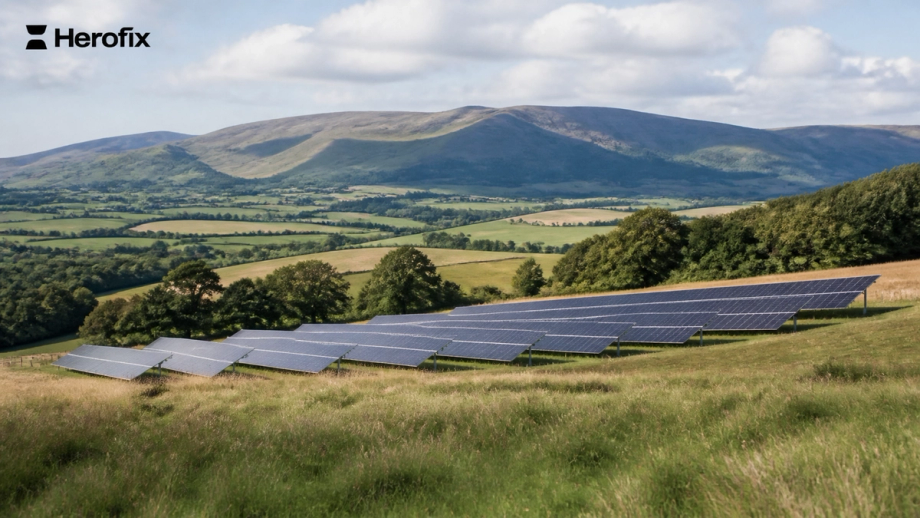
That is why more farmers are looking at farm solar panels as a way to generate electricity on-site and reduce reliance on the grid.
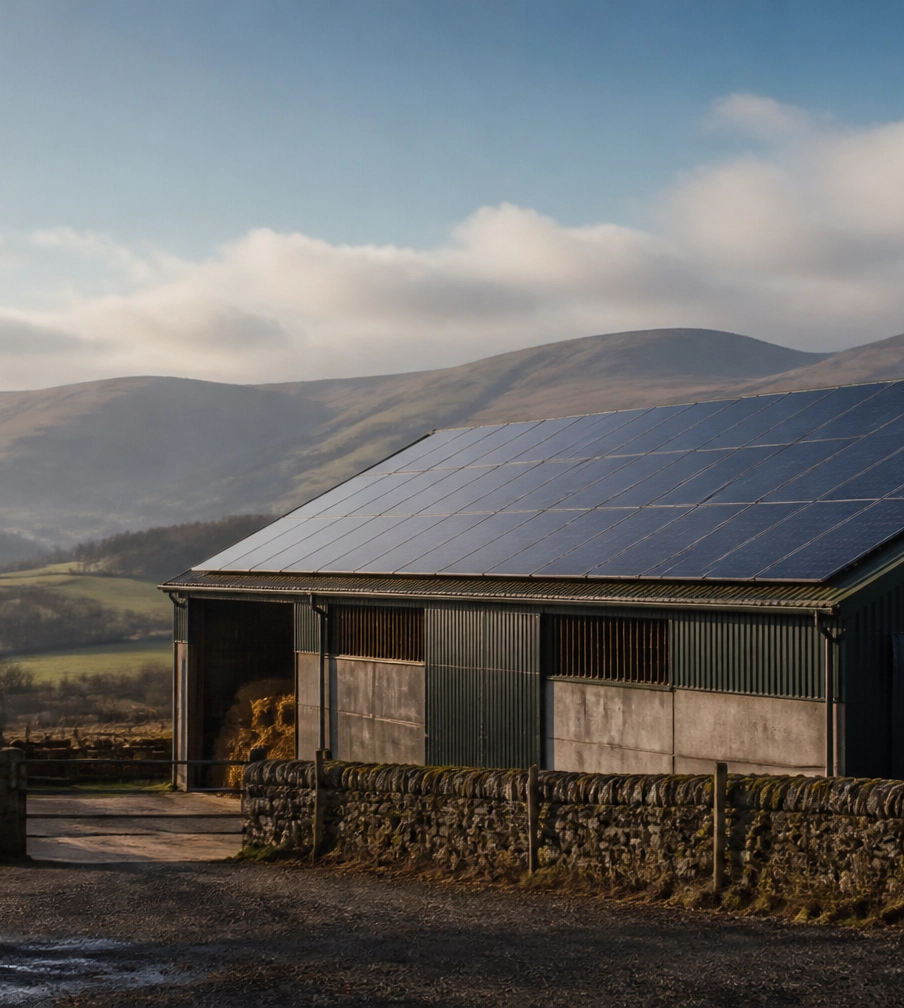
For a Perthshire farm, rooftop solar on an existing barn, shed, dairy, grain store or workshop can be more straightforward than building a large solar farm in a field. However, the right system depends on your electricity use, roof condition, grid connection, planning position and how much of the solar power you can use during the day.
This guide explains what farmers across Perth and Kinross need to consider in 2026.
Want to skip the read and speak to a member of the team? Get in touch.
What are farm solar panels?
Farm solar panels are photovoltaic (PV) panels installed on agricultural buildings or land to generate electricity for a farming business.
They can be installed on:
- Dairy buildings and milking parlours
- Grain stores and cold stores
- Cattle sheds and livestock buildings
- Workshops and machinery sheds
- Poultry buildings
- Equipment stores
- Farm offices
- Commercial units and agricultural businesses
Most farm solar projects are designed primarily for self-consumption. This means the electricity generated is used by the farm before any surplus is exported to the grid.
That is different from a large, ground-mounted solar farm designed mainly to sell electricity. The planning, land-use, grid and environmental considerations are usually much more extensive for a commercial solar farm on open agricultural land.
Why are farmers considering solar panels for agricultural buildings?
1. Lower daytime electricity imports
Solar panels generate electricity during daylight hours, which often matches the operating pattern of many agricultural businesses.
For example, solar power could support:
- Milking and cooling systems
- Refrigeration and cold storage
- Ventilation fans
- Water pumps
- Automatic feeders
- Lighting
- Workshop equipment
- Electric tractors, vans and utility vehicles
- Grain handling and processing equipment
The more electricity your farm uses while the panels are generating, the greater the potential value of the system.
Solar will not remove every electricity bill. Farms still need power during evenings, overnight periods and darker winter days. However, using more of your own generation can reduce the amount of electricity purchased from your supplier.
2. Make use of suitable roof space
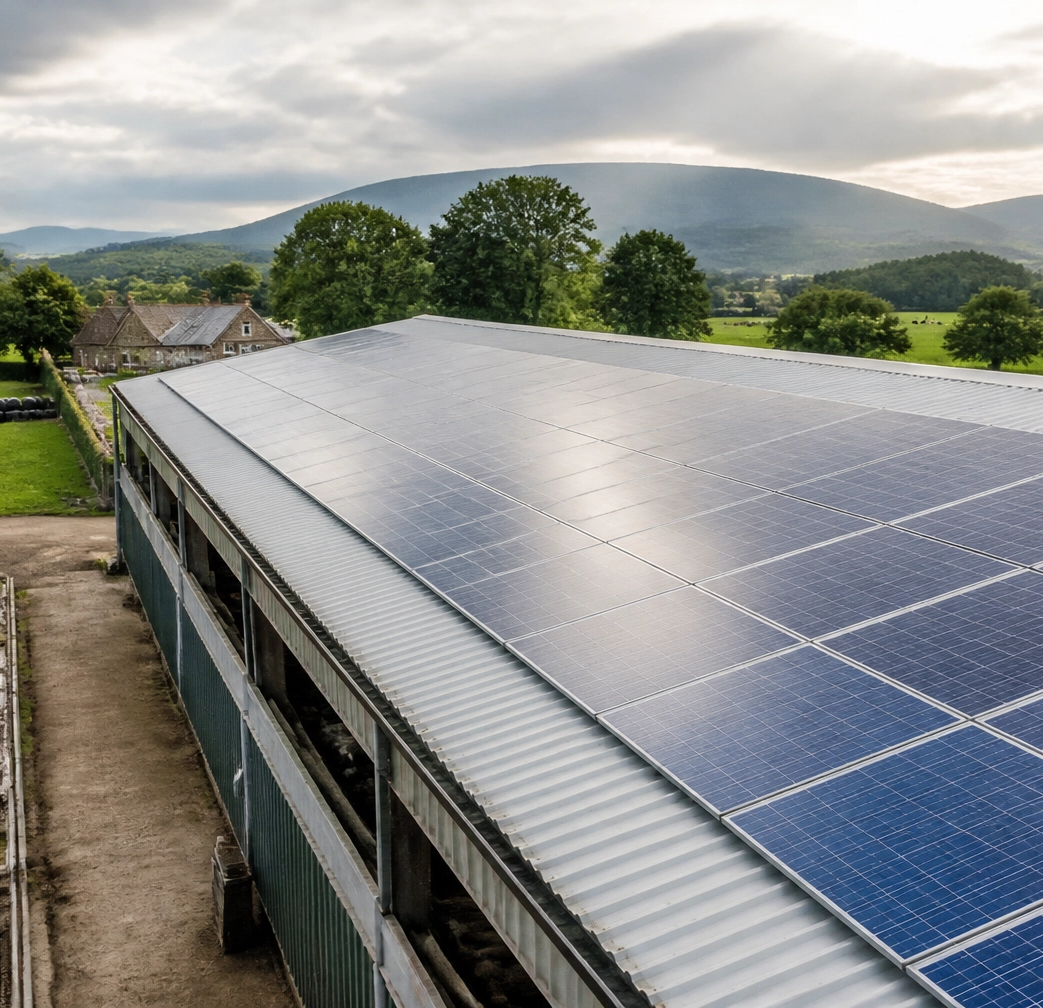
Large farm buildings often have extensive roof areas that are already part of the business. A well-positioned roof can provide space for a substantial solar array without taking productive land out of agricultural use.
South-facing roofs may offer strong annual generation, but east- and west-facing roofs can also be useful. The best design depends on the roof orientation, pitch, shading, building layout and when the farm uses electricity.
A survey should assess the roof rather than assuming that every square metre is suitable.
3. Reduce exposure to energy price changes
Electricity prices can change over time. Generating some power on-site can give a farm greater control over part of its energy costs.
This does not eliminate financial risk. Solar panels have an upfront cost, and the return depends on installation costs, electricity prices, system performance, maintenance, financing and the amount of electricity used on-site.
A professional proposal should show the assumptions behind any payback estimate.
4. Support wider farm decarbonisation
Solar panels may form part of a wider plan that includes:
- Battery storage
- Heat pumps for suitable farm or office buildings
- Electric vehicle and machinery charging
- Improved insulation
- More efficient refrigeration
- LED lighting
- Energy monitoring and controls
A whole-site energy assessment can help identify which improvements should be completed first.
Solar panels for farms: self-consumption or export?
There are two main ways to use electricity generated by farm solar panels.
Self-consumption
Self-consumption means using the solar electricity directly on the farm. This is often the most important part of the business case because it offsets electricity that would otherwise be imported.
For example, a dairy with regular daytime demand may be able to use a significant proportion of its generation as it is produced.
Exporting surplus electricity
If the panels generate more electricity than the farm needs at a particular time, the surplus may be exported to the grid.
Export payments depend on your agreement with an energy supplier, your export meter, system size, certification and grid approval. The Smart Export Guarantee information from Ofgem explains the general scheme rules.
For smaller systems, MCS certification is commonly required for SEG eligibility. For larger commercial installations, suppliers may accept other recognised certification and commissioning documentation, but requirements vary. Ask your installer to confirm what will be needed before you rely on export income.
Export should normally be treated as a secondary benefit rather than the only reason to install solar.
Could a farm battery improve the business case?
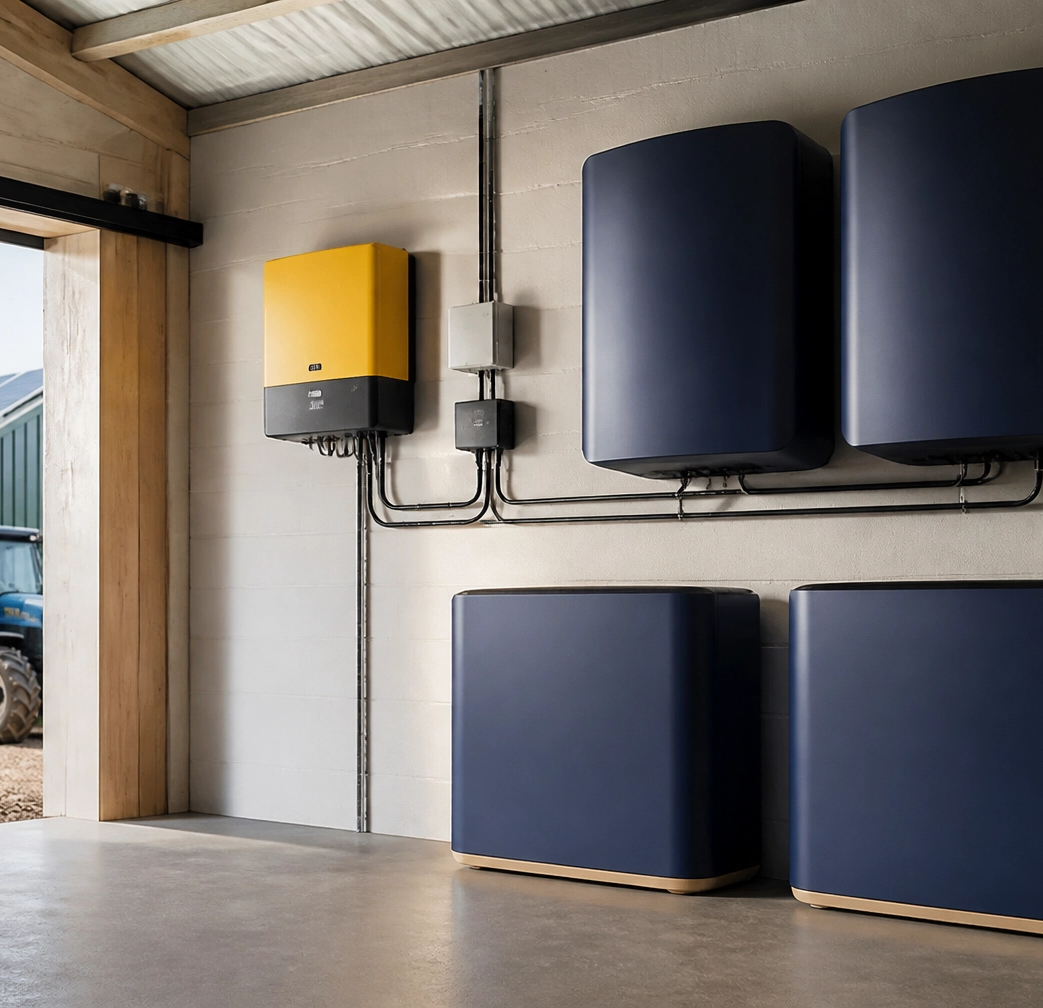
A battery can store surplus solar electricity and make it available later.
This may be useful when:
- The farm has high evening or overnight demand
- Refrigeration or ventilation continues outside daylight hours
- Machinery charging takes place later in the day
- Solar generation is higher than the farm’s immediate demand
- The electricity tariff changes throughout the day
- The site has a suitable export limit
A battery does not create electricity. It adds cost, equipment and future replacement considerations, so it should be sized around the farm’s load profile rather than simply matched to the panel capacity.
A battery may also reduce imports during periods when electricity is more expensive. On some commercial tariffs, reducing the farm’s maximum import may help with demand-related charges, but this depends on the tariff and meter arrangement. It is not guaranteed.
Backup power is a separate question. A standard solar-and-battery system may not keep a farm running during a grid outage. Backup requires compatible equipment, appropriate electrical design, islanding protection and a planned critical-load supply. Discuss essential equipment, such as refrigeration or water systems, with your installer before assuming backup is available.
How much do solar panels for a farm cost?
There is no reliable single price for solar panels for farms in the UK. A commercial agricultural installation is priced according to its design and site conditions.
The main cost factors include:
- Total panel capacity in kWp
- Roof size and accessibility
- Roof repairs or replacement
- Structural strengthening
- Inverter type and quantity
- Battery capacity
- Scaffolding and lifting equipment
- Cable routes and switchgear
- Three-phase electrical work
- Export limitation equipment
- DNO application and any network reinforcement
- Planning or environmental work
- Monitoring and maintenance arrangements
A farm should request an itemised quote showing the cost of the solar array, battery, electrical works, grid connection, surveys and any exclusions.
Payback depends on the proportion of electricity used on-site, import prices, export rates, finance costs, maintenance and the system’s actual generation. Be cautious about proposals promising a guaranteed payback without showing their assumptions.
Roof, asbestos and structural checks
Before designing solar panels for agricultural buildings, arrange a proper site assessment.
The installer should consider:
- The age and condition of the roof
- The roof’s load-bearing capacity
- Wind and snow loading
- Water ingress and corrosion
- Roof access and safe working areas
- Shading from trees, buildings or silos
- The position of electrical equipment
- Fire access and maintenance routes
Older farm buildings may contain asbestos cement roofing or other asbestos-containing materials. Do not drill, cut or alter a roof until it has been assessed by a competent person. Solar installation may be possible in some cases, but the method must be planned around asbestos safety requirements.
If the roof is likely to need replacement soon, it may be more economical to deal with that work before installing panels.
Three-phase supplies, DNO approval and G99
Many farms have three-phase electricity supplies, especially where they operate larger motors, cooling systems and machinery.
Farm solar installations are often larger than domestic systems. If the proposed generation exceeds the relevant small-generation threshold, the installer will normally need to submit a G99 application to the Distribution Network Operator (DNO) before connection.
For systems connected in the SSEN area, generation above 3.68 kW per phase generally falls under G99. Perthshire properties may be served by SSEN or another network operator depending on their exact location.
The DNO may:
- Approve the proposed export
- Set an export limit
- Require export-control equipment
- Ask for additional technical information
- Require network reinforcement
- Affect the project timetable and cost
Planning permission and DNO approval are separate matters. A project can be permitted development for planning purposes but still require formal grid approval.
Planning permission for solar panels on agricultural buildings in Scotland
Rooftop solar on an existing non-domestic agricultural building may qualify as permitted development under Scottish rules, subject to conditions.
The current conditions can include limits relating to:
- Panel projection above the roof
- The total output of the installation
- Listed buildings and their curtilage
- Sites of archaeological interest
- Aerodrome and technical-site restrictions
- Sensitive landscapes and other designations
Some non-domestic solar permitted-development rights have a 50 kW output limit and a 200 mm projection condition. Larger rooftop systems may therefore require a planning application, depending on the detailed circumstances and current rules.
Ground-mounted solar is different. A small array close to an existing building may benefit from permitted-development rights in certain circumstances, but a larger array on open agricultural land will generally require planning permission.
Before proceeding, check the latest position with Perth & Kinross Council and, where necessary, seek written confirmation or professional planning advice. This is particularly important for farms near Perth, Blairgowrie, Coupar Angus, Cupar, Scone, Bridge of Earn, Crieff, Auchterarder, Kinross, Dunkeld, Aberfeldy and Pitlochry, where local landscape, heritage or conservation constraints may apply. Additional care may also be needed in the Carse of Gowrie and Highland Perthshire.
Funding, VAT and finance in 2026
The temporary 0% VAT rate for qualifying energy-saving materials runs until 31 March 2027. However, this does not automatically apply to solar installed on commercial agricultural buildings. The relief is generally focused on residential accommodation and certain charitable buildings, so farm businesses should confirm the VAT treatment with their accountant.
VAT-registered businesses may be able to reclaim VAT through their normal VAT arrangements, subject to their circumstances.
Business Energy Scotland can provide advice for Scottish businesses, including farms. However, support is not automatically a grant for solar PV. Eligibility, eligible technologies and application rules can change. Confirm the current position directly with Business Energy Scotland before including any funding in your financial plan.
Other options may include:
- Commercial or agricultural bank finance
- Asset finance
- Tax allowances
- Rural investment schemes
- Supplier finance
- A combination of solar, efficiency and renewable-heat funding
Treat grants, loans and tax reliefs as different types of support. A loan must be repaid, while a grant has eligibility conditions and may require an application before work starts.
Choosing solar installers for Perthshire farms
Look for a contractor with experience in commercial or agricultural solar, not only domestic installations.
Ask whether the installer can manage:
- Roof and structural surveys
- Asbestos-related requirements
- Three-phase systems
- G99 applications
- Export limitation
- Battery storage
- MCS certification or equivalent documentation
- Monitoring and maintenance
- Insurance and warranties
- Planning checks
- Electrical testing and handover documents
You can learn more about Herofix’s commercial services, solar panel solutions and battery storage, or request a quote for an initial discussion.
Farm solar panels: a practical starting point
A sensible process is:
Review the farm’s electricity bills and half-hourly consumption.
Identify buildings with suitable roof space.
Check roof condition, asbestos risk and structural capacity.
Decide whether the priority is self-consumption, export, battery storage or backup.
Ask an experienced installer for a feasibility assessment.
Confirm planning requirements with Perth & Kinross Council.
Submit any required G99 application before committing to connection.
Confirm VAT, tax and finance details with your accountant.
Compare itemised proposals rather than headline payback figures.
For farms with regular daytime electricity demand, rooftop solar can be a practical way to produce more of the power the business already uses. The strongest projects are carefully sized around the farm’s real operations, rather than based solely on available roof space.
Want to speak to a member of the team? Get in touch here.