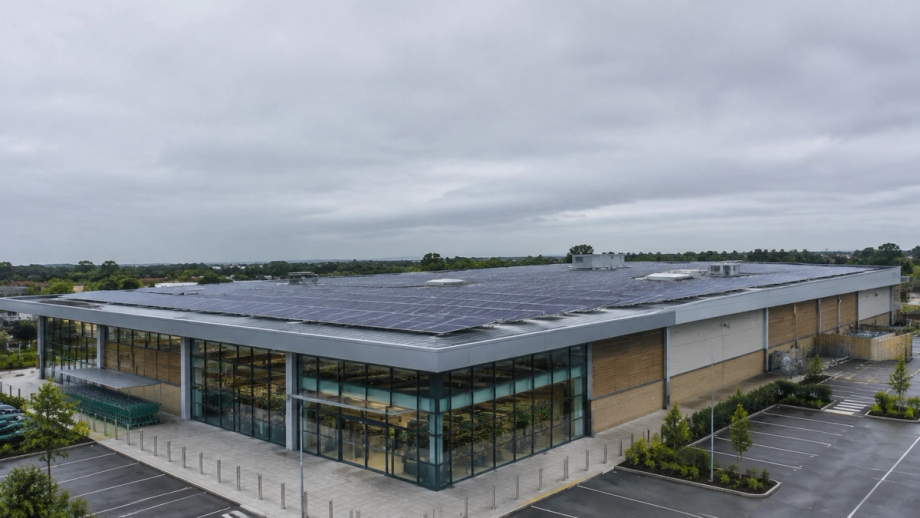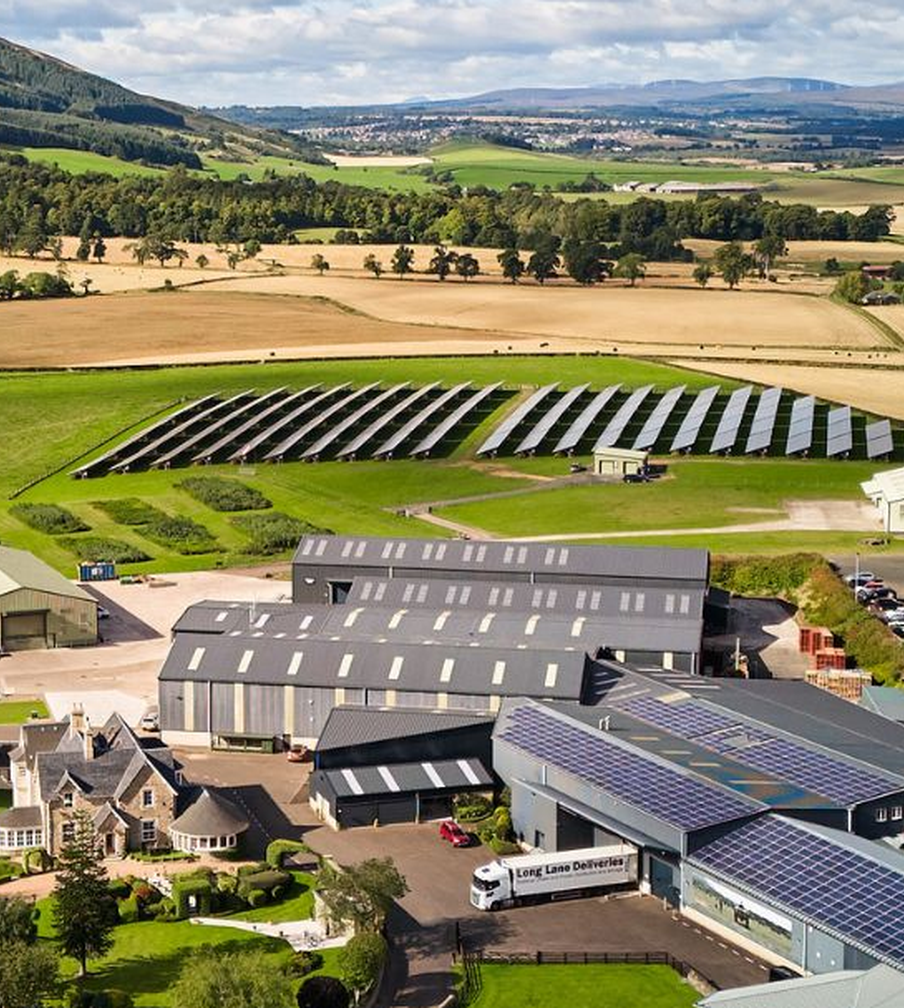
This case study looks at a project publicly announced by Simon Howie. Herofix was not involved. Photographs are reproduced from Simon Howie’s own public announcement of the project.
In Dunning, Perthshire, an 11-acre field directly behind the Simon Howie factory became the setting for a major expansion of the company’s renewable energy. The centrepiece: 3,800 solar panels, installed as a 2.1 MW ground-mounted array.
It’s a striking example of what a manufacturer can do when it has high energy demand, suitable land and the capital to invest. But the story is just as useful for a more modest reason: Simon Howie had already tried solar on its factory and warehouse roofs. After ten years, the company decided that first step was no longer enough.
Who are Simon Howie?
Simon Howie is a Scottish food manufacturer based in Dunning, in the heart of Perth and Kinross. Its factory produces food for busy trading periods, including Christmas and the run-up to Burns Night, when demand for haggis is high.
In its 2023 account of its sustainability plans, the company explained that energy prices had risen sharply and become a significant pressure on costs. Its stated aim was not simply to promote a green image. It wanted greater control over future energy costs and to protect customers from energy-related price rises.
This case study draws on the company’s announcement on 30 September 2024, when it said the combined renewable energy system had been switched on. The figures below are the project details and forecasts published by Simon Howie at that time, not independently audited figures for current performance.
Why solar suited the factory
Food manufacturing uses energy across long operating hours. Refrigeration, cooking, packing lines and compressed air all add to electricity demand. Wash-downs and cleaning also require hot water. For a factory with a substantial and fairly continuous load, there can be plenty of ways to use electricity as it is generated.
That makes the commercial case for solar about more than carbon. Producing some electricity on site can reduce reliance on purchased power and help businesses manage exposure to volatile energy prices. This was central to Simon Howie’s own explanation of the investment: protecting its business and customers from energy-related price rises.
The company had also learned from experience. In 2013, it installed 600 solar PV panels on its factory and warehouse roof. Over the next decade, the panels brought benefits, but Simon Howie later said the system was no longer large enough to make a significant difference to operating costs or environmental impact. The rooftop installation was not a mistake; it was a useful first step that eventually stopped being enough.
The next stage was on a much larger scale. An 11-acre, south-facing field immediately behind the factory offered space for a ground-mounted array that a town-centre business is unlikely to have. That’s an important caveat: this is a scaling story shaped by the site’s available land, not a template every business can reproduce.
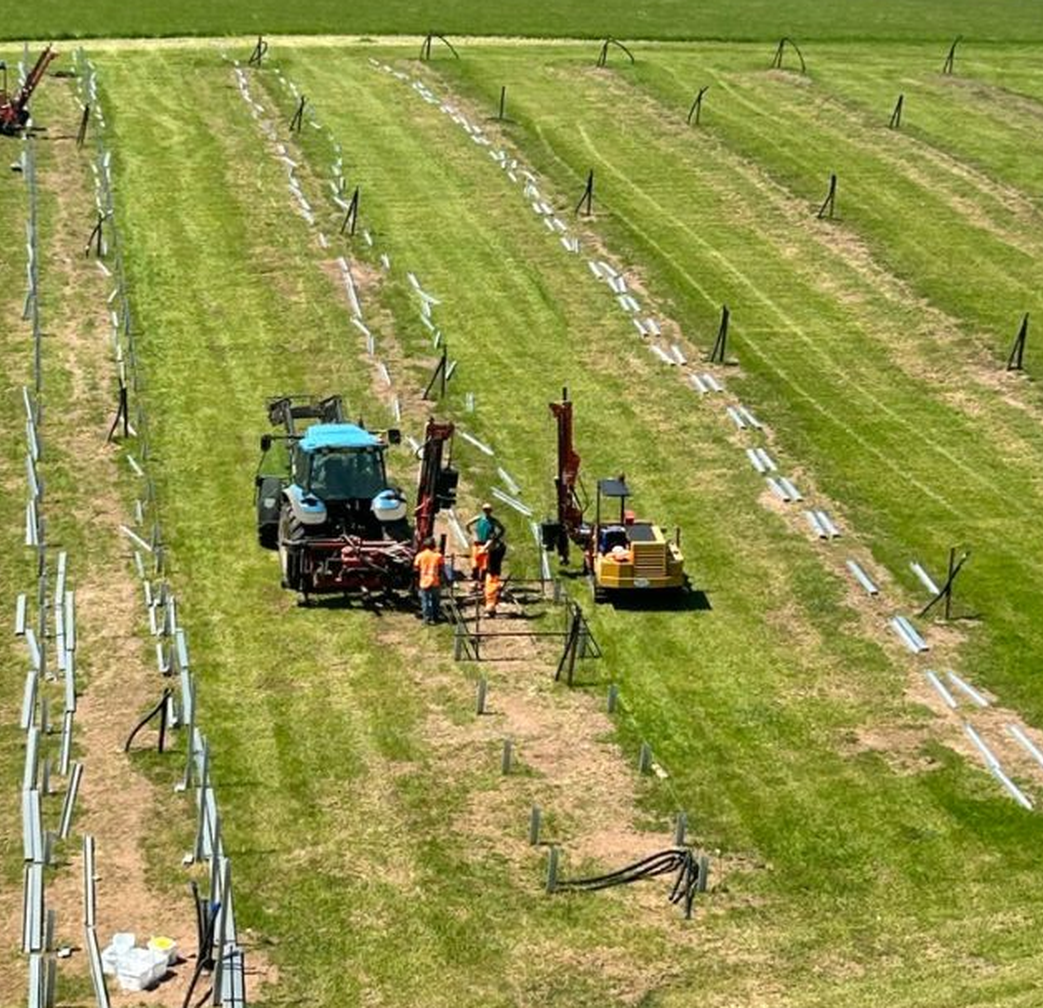
Photograph from Simon Howie’s public announcement, showing the array under construction.
What the solar job involved
Simon Howie describes the array as 2.1 MW, comprising 3,800 panels rated at 550 W each. Multiplying the panel count by the stated rating gives about 2.09 MW, which is consistent with the rounded 2.1 MW description.
Work on the field array began in May 2023. The company says groundwork started first, with the switch room and battery rooms following in June. Cables were laid, and the panels were fully installed by early August. The wider system was switched on on 30 September 2024, after connection and testing.
At this scale, a ground-mounted array is a substantial construction and electrical project, not simply panels placed in a field. Site conditions, drainage, slope and routes for cabling back to the factory all need consideration. Mounting structures, inverters, electrical protection, earthing and lightning protection also have to be designed as part of the system.
Planning permission was obtained for Simon Howie’s array. In Scotland, permitted development for free-standing solar on non-domestic land is limited: the relevant Class 6N provision allows a total surface area of up to 12 m², far below a project of this size. The applicable planning route depends on the site and proposal, so businesses should check their own circumstances rather than assume a large field array qualifies for permitted development. The Scottish planning regulations provide the formal detail.
Grid connection is another major consideration. An installation of this scale needs to go through the appropriate grid-connection process, including a G99 application. Simon Howie described connection as far from plug and play, noting the safety and speed checks before the system received the all-clear. The switch room and separate battery rooms also show how a project like this extends beyond the array itself.
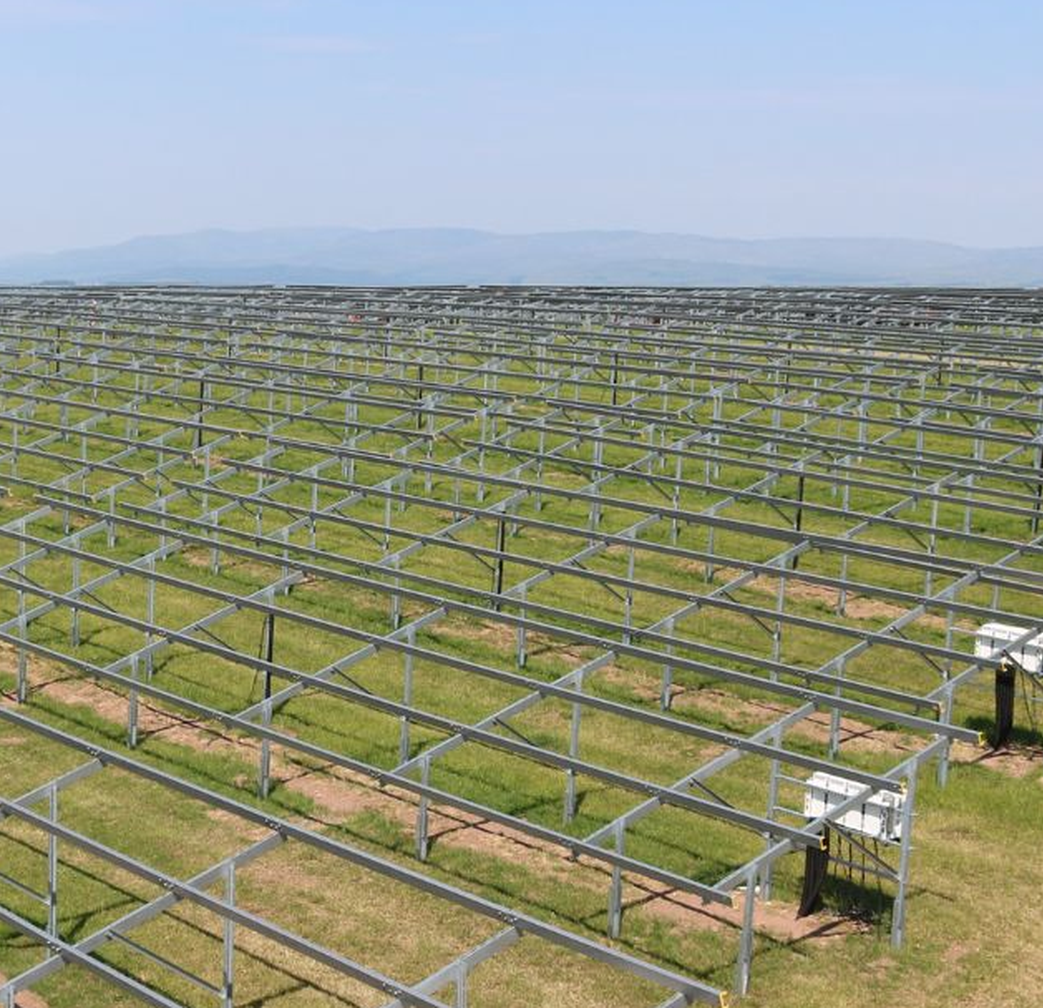
Photograph from Simon Howie’s public announcement, showing the mounting frames before the panels went on.
Solar was one part of a wider energy system
The 2.1 MW solar array was not designed to do everything on its own. The company’s forecast that its system would produce more than 120% of its energy needs refers to the combined generation from wind and solar, not solar alone.
The wider scheme includes a 2.3 MW wind turbine, installed in July and August 2024. Simon Howie says it was bought second-hand from a decommissioned wind farm in the Netherlands, with delivery through rural Perthshire’s narrow roads adding to the logistical challenge. The turbine has a 69-metre hub height and 35-metre blades.
Two batteries, each with 450 kWh of storage, help hold electricity for night shifts and periods with less sun or wind. Once the batteries are full and the site’s demand is met, surplus generation can be exported to the grid. The company also installed two 12,000-litre thermal energy stores with heaters to pre-heat wash-down water, allowing it to stop using gas for that purpose.
Other parts of the site’s environmental plans include a borehole 100 metres deep for cleaning and wash-down water, a wastewater treatment system with six wetland cells of around 400 m² each, a willow soak-away rather than discharge to a watercourse, and more than 30 acres of planted trees.
Together, these measures help explain the scope of the project. They should not, however, blur the distinction between the solar array and the combined system: solar alone would not deliver the company’s stated forecast of over 120% of its energy needs, particularly for a factory running night shifts in a Scottish winter.
Project costs and published forecasts
Simon Howie described the total investment as £3.7 million, funded primarily by the business, with a £500,000 Scottish Enterprise grant towards the solar panels.
At the time of its September 2024 announcement, the company forecast that the combined wind and solar system would generate over 120% of its energy needs and reduce carbon emissions by more than 500 tonnes a year. It also estimated that over 200 tonnes of carbon would be saved during the October-to-February peak season alone. These are the company’s published forecasts, not independently verified current results.
The timing was commercially relevant: the system was switched on shortly before the busy months covering Christmas production and haggis season. The announcement also said staff numbers had risen to more than 140, an increase of over 20 on the previous year. That is part of the business context, not proof that the energy project caused the increase.
A quote from Simon Howie
Simon Howie, owner, said:
> “After two years of planning it's wonderful to see our renewable energy system now live. Getting the wind turbine and solar panels operational has been a logistical challenge but will reap rewards both for us as a business but also for our customers and consumers as it allows us to do all we can to protect them from energy-related price hikes.”
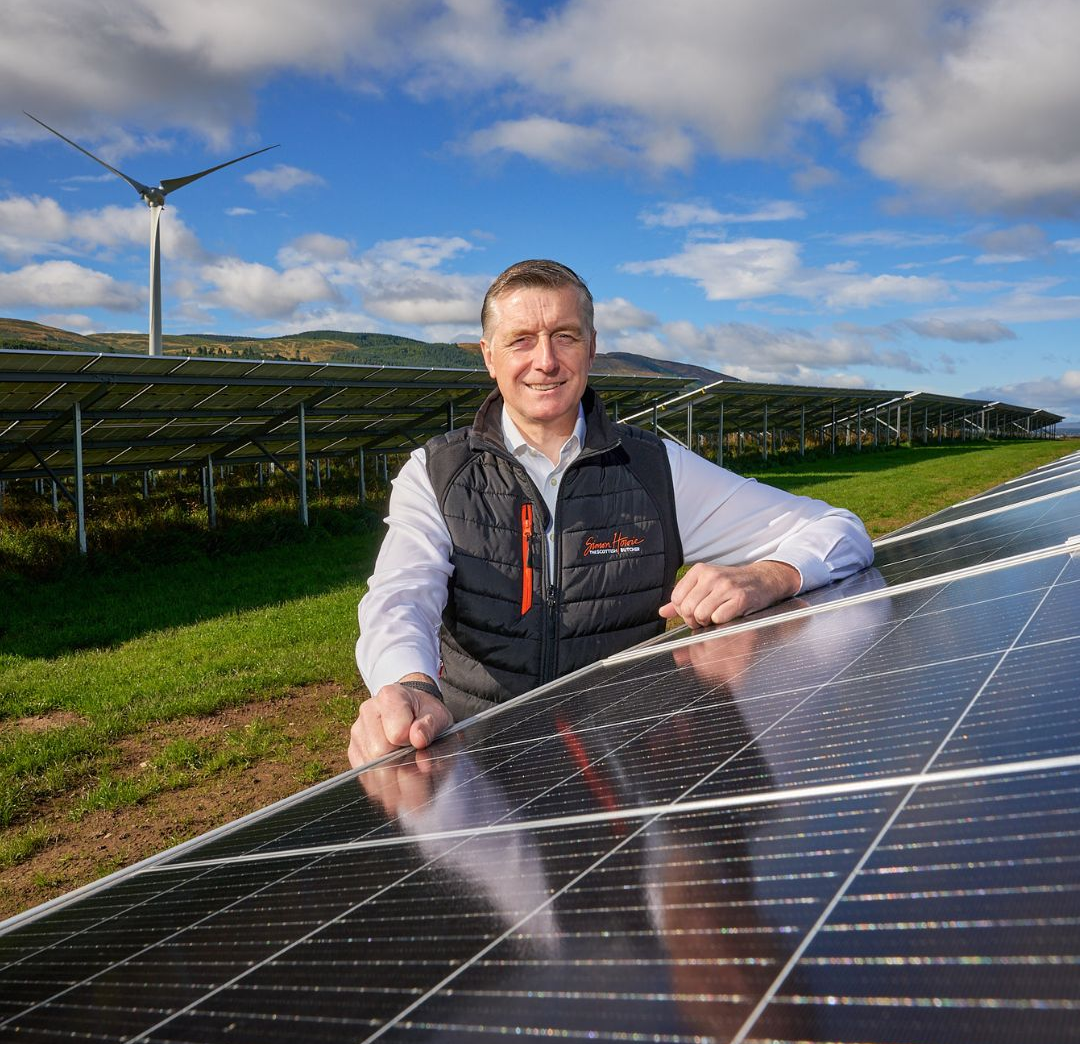
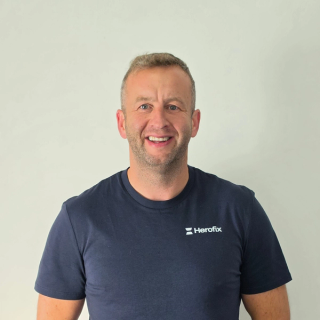
Simon Howie at the Dunning site. Photograph from the company’s public announcement.
He added:
> “We take our responsibilities to the planet very seriously. The climate emergency is real and as one of Scotland's biggest food manufacturers we are committed to a more sustainable future. We hope that by showcasing the environmental and commercial benefits of renewable energy, we can encourage other food and drink manufacturers to consider how they can consider a more responsible future.”
What other businesses can take from it
The lesson is not that every business needs an 11-acre solar field, a wind turbine and a multi-million-pound budget. Most premises will not have that combination of land, demand and investment capacity. Instead, the case offers a few practical points to consider:
- Start with your actual energy use. The value of on-site generation depends in part on when electricity is used, not just how much a system can produce.
- Treat a first installation as a starting point. Simon Howie’s 2013 rooftop array delivered benefits for years, even though the company later decided it needed to scale up.
- Think beyond daytime generation. Batteries can shift electricity to other periods, but their capacity should be considered alongside demand and operating hours.
- Check land, planning and grid constraints early. A large ground-mounted scheme requires more than an available field; planning permission and grid connection are fundamental parts of the project.
- Look at the whole energy system. The company combined solar with wind, batteries and heat storage because its needs extended beyond what solar generation alone could cover.
For businesses without spare land, rooftop solar or a solar carport may be more relevant options. The right approach depends on site suitability, electricity use, roof condition, grid capacity, budget and planning requirements.
FAQs
It depends on the factory’s demand, its hours of operation, the system size and site conditions. Simon Howie’s forecast of over 120% of its energy needs was for its combined wind-and-solar system, with battery storage, not for solar alone.
Not necessarily. A field array can offer more space where a business owns suitable land, while rooftop solar may suit premises with an appropriate roof and enough usable area. Structural condition, planning, grid capacity, costs and energy demand all matter.
There is no single right size. Battery capacity should be assessed against how much electricity a business uses, when it uses it, how much generation it wants to store and its wider energy system. Simon Howie installed two 450 kWh batteries as part of a combined wind, solar and storage scheme; that scale is not a general recommendation.
Exploring commercial solar?
Simon Howie’s project shows what can be built when a high-energy-use business has suitable land and a clear long-term case for investment. For other businesses, the sensible first step is to assess the site, energy use, roof or land options, planning and grid constraints.
Herofix supplies and fits commercial solar, including ground-mounted arrays of this kind, along with battery storage. We were not involved in the Simon Howie project and can’t promise the same outcomes on a different site, but we can assess your land, energy use, planning position and grid connection and tell you honestly what is achievable. If you’re exploring commercial solar, get in touch with Herofix to discuss your site.