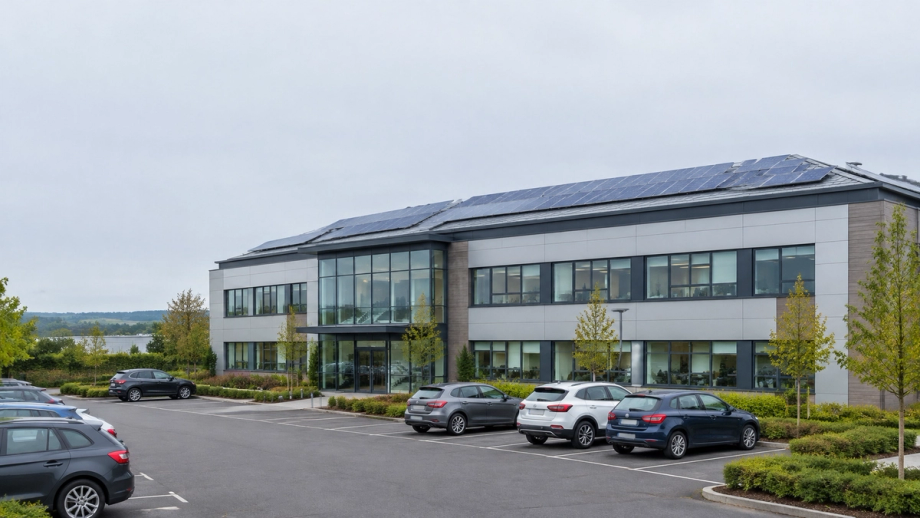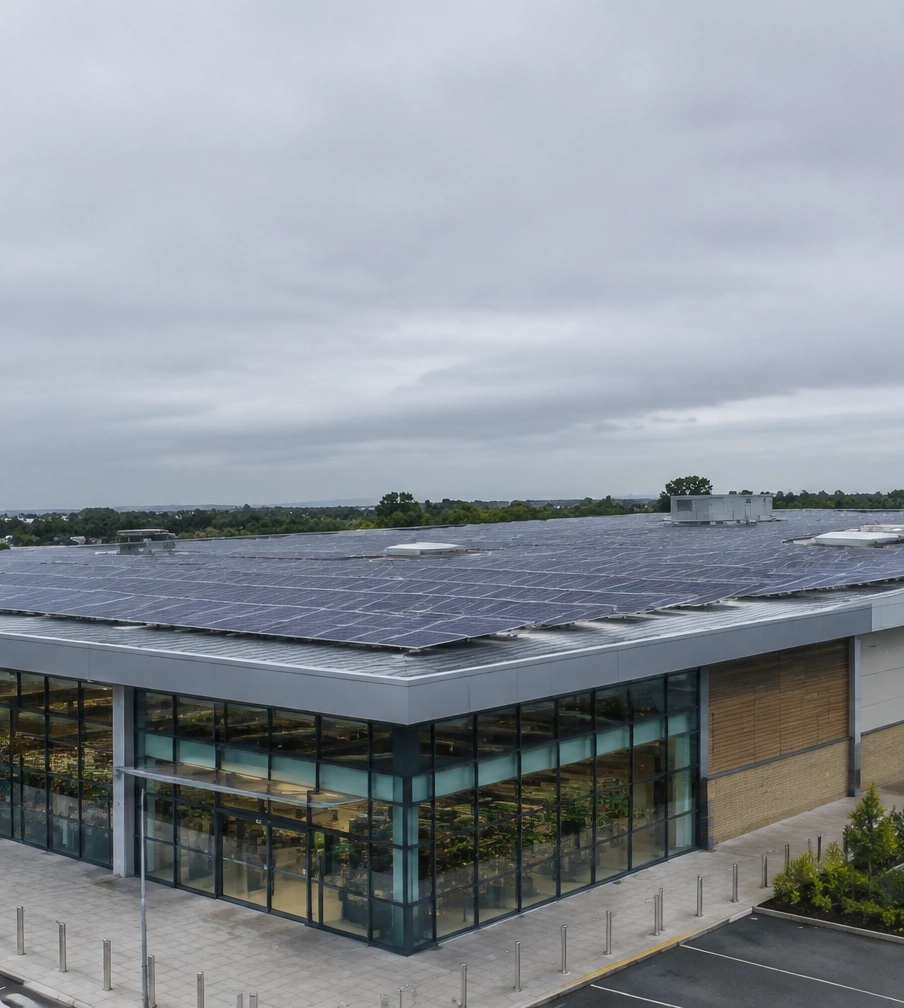
Illustrative image only. It does not show an Aldi store or the announced installation.
This is an outsider’s analysis of Aldi’s publicly announced solar programme, reported by The Grocer on 29 October 2026. Herofix was not involved in the project. The value in looking at Aldi’s plans is in the principles they highlight for other businesses considering rooftop solar.
Who Aldi are
Aldi is a discount supermarket chain operating across the UK. Its tightly controlled range and focus on low operating costs are central to its business model. That makes energy a practical operational issue, not just a sustainability talking point: controlling a significant running cost fits the logic of a discounter.
Aldi plans to invest £17.5 million in solar panels at 230 more stores between 2027 and 2031. It had previously announced an £8.4 million investment to install panels at 100 stores during 2025 and 2026. More than 500 Aldi stores are expected to have solar panels by the end of 2026.
According to The Grocer, each new installation is expected to be capable of providing up to 30% of a store’s annual energy requirements. That is a substantial potential contribution, but “up to” matters: 30% is a ceiling for an individual store, not a guarantee for every installation or across the estate.
Why solar works for supermarkets
The strongest fit is the relationship between when solar generates electricity and when a supermarket uses it.
Panels generate during daylight. Meanwhile, refrigeration, lighting, tills, bakery equipment and heating, ventilation and air conditioning (HVAC) all contribute to a store’s electricity demand during trading hours. The more solar electricity a business can use on site as it is generated, the less it needs to export. Typically, self-consumed electricity is more valuable than electricity exported to the grid.
Refrigeration also gives supermarkets a relatively consistent electricity demand throughout the day and across the year. That provides somewhere for solar generation to go beyond the sunniest summer afternoons, although output still changes with daylight and weather.
Then there is the roof. Aldi’s Jonathan Neale told The Grocer, “We have plenty of space on our store roofs, so it makes sense to use it.” Using existing roof space avoids the need to acquire separate land for the generation equipment. For a business with suitable buildings, that can turn an underused part of its estate into a productive energy asset.
Solar is not a complete answer to energy-price volatility. It can reduce reliance on the grid for part of a site’s electricity use, but it will not supply all a store’s energy needs at every hour. Recent movements in energy prices, including the announced 26% rise in Ofgem’s price cap from January 2027, underline why businesses may look for ways to manage some of their exposure.
The rollout also has a lesson in scale. Planning works across many similar buildings over several years can allow a business to repeat designs and access arrangements, buy equipment in volume and carry learning from one site to the next. That can make a multi-site programme more efficient than treating every site as a one-off. Smaller operators with several premises can consider the same principle, even if their projects are more modest.
What a commercial rooftop solar job involves
The public report sets out Aldi’s investment, planned number of stores and expected generation capability; it does not describe the detailed engineering or construction plan. For any commercial rooftop programme, however, much of the work happens before panels are installed.
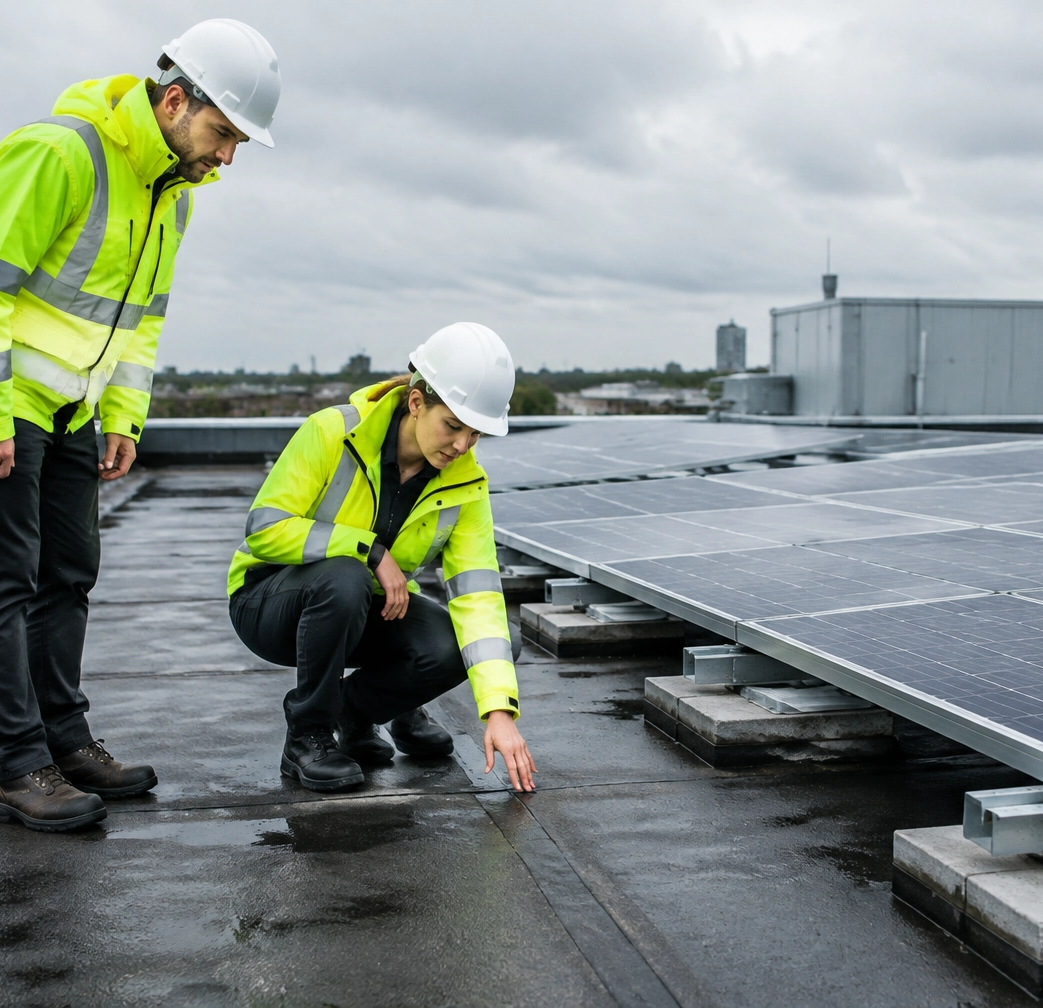
Roof checks and design decisions are essential before installation begins.
First comes the roof assessment. A solar array adds weight, so the structure needs to be checked before the system is designed. On a portal-frame supermarket, that means assessing purlins, spans and load-bearing points, as well as wind and snow loading, particularly at exposed sites. The roof’s condition and remaining service life matter too. Installing panels on a roof that needs replacing soon can mean paying to remove and reinstall the array later.
The roof covering shapes the mounting design. Standing-seam or trapezoidal metal roofs may suit clamp or rail systems. Membrane and flat roofs often call for ballasted frames. The mounting approach affects weight, wind uplift and whether the roof membrane needs to be penetrated. Rooflights, ventilation plant, chiller units and smoke vents also influence panel placement and can create shading that designers need to account for.
Electrical and grid requirements need planning. The installer must check the three-phase supply, available capacity in the distribution board, inverter location, cable routes and electrical protection. Most commercial systems exceed the G98 microgeneration threshold of 16 A per phase (3.68 kW on single phase) and therefore need a G99 application to the distribution network operator before connection. Approval can take time and may include an export limit. A system cannot simply be switched on before the required consent is in place.
Planning rules must be checked for the building and its setting. Rooftop solar on a non-domestic building may benefit from permitted development rights, but listed buildings, conservation areas, national parks and aerodromes need particular consideration. Scotland has its own non-domestic permitted development rights, so requirements differ north of the border. The position should be checked for each site rather than assumed.
Installation has to fit around trading. Work across an operating retail estate needs agreed working hours, safe roof access, appropriate scaffolding or mobile elevating work platforms (MEWPs), any necessary electrical isolations and coordination with store teams. A phased approach can help keep sites operating while work progresses.
Finally, the system needs to be measured and looked after. Half-hourly data for each site can show how generation compares with consumption. A maintenance plan matters too: commercial solar is a long-term asset, commonly expected to operate for 25 to 30 years, and should be inspected rather than simply left alone.
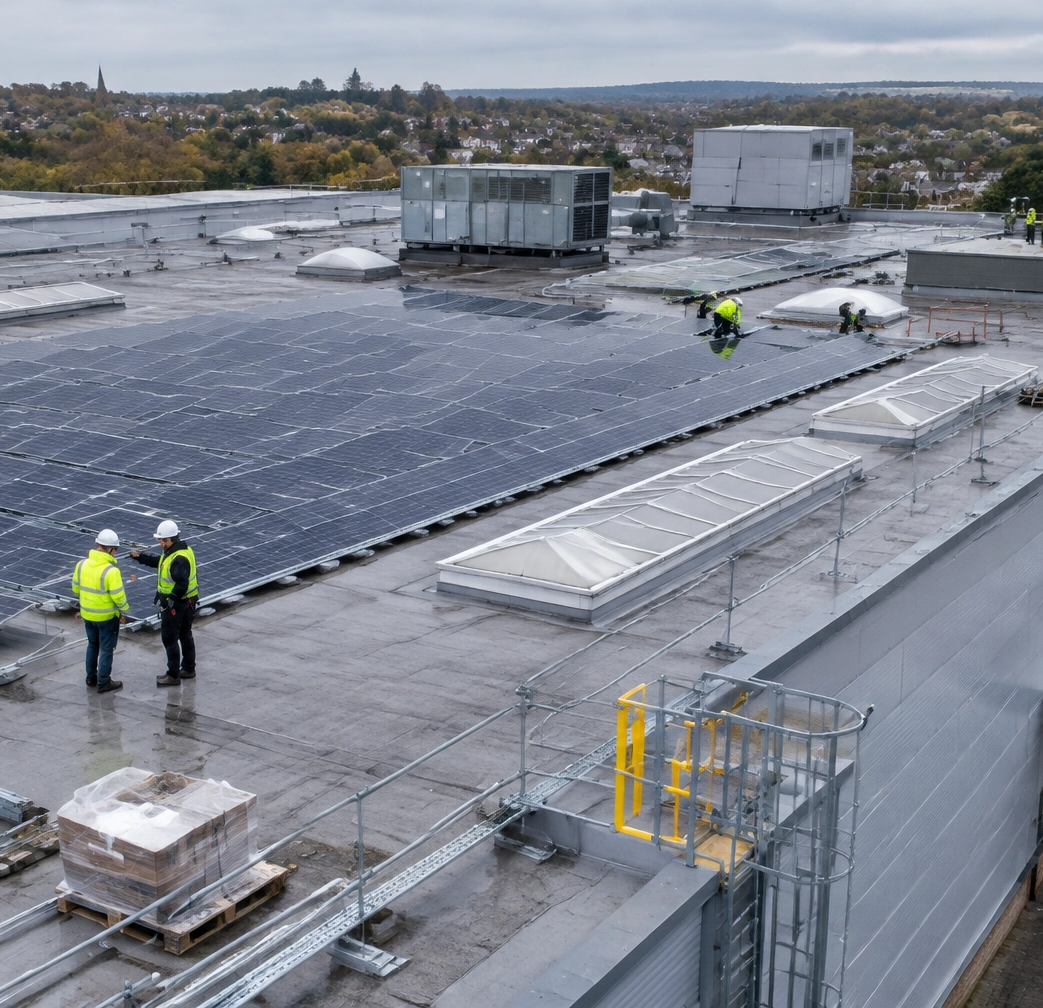
Roof equipment and safe access all affect the final layout and installation plan.
Aldi’s words on the programme
Jonathan Neale, Aldi UK managing director of national real estate, said, as quoted by The Grocer:
> “We have plenty of space on our store roofs, so it makes sense to use it.”
> “We want solar power to become a normal part of how we run our stores, and this investment will help us bring it to even more locations over the coming years.”
> “By generating more of our own electricity, we can reduce our reliance on the grid and make our stores more sustainable.”
The message is about making on-site generation part of normal operations, not treating it as a standalone gesture.
What smaller businesses can learn
The same logic can apply at a smaller scale. If your business uses significant electricity during daylight, has suitable roof space and has a consistent load, solar may be worth assessing. That could include cold storage, a workshop, a dairy, a hotel with a laundry, or an office with air conditioning.
The right opportunity depends on the building and its electricity demand. Roof condition, structural capacity, grid connection and how much electricity you can use while panels are generating all affect suitability. Aldi’s reported “up to 30%” figure is specific to its announced installations and should not be treated as a forecast for another business.
Explore commercial solar with Herofix
If you are considering solar for a commercial building, Herofix can provide a free assessment of your roof, electricity use and grid connection. It is a practical first step, not a commitment to install. Suitability depends on the roof and the building’s demand.
Explore Herofix commercial services or request a quote.
Commercial solar FAQs
For Aldi’s newly announced installations, each system is expected to be capable of providing up to 30% of a store’s annual energy requirements. This is a maximum expectation per store, not a guaranteed result across every site or a figure to apply to other businesses.
Supermarkets use electricity for refrigeration, lighting, tills and other equipment during the day, when solar panels generate. That daytime demand can allow more of the generated electricity to be used on site rather than exported.
Most commercial solar systems exceed the G98 threshold of 16 A per phase (3.68 kW on single phase) and need a G99 application to the distribution network operator before connection. Approval may take time and can include an export limit.
Rooftop solar on a non-domestic building may fall under permitted development, but this depends on the building and its surroundings. Listed buildings, conservation areas, national parks and aerodromes need checking. Scotland’s non-domestic permitted development rules differ, so confirm the requirements for the specific site.
Commercial solar is a long-term asset, commonly expected to operate for 25 to 30 years. The roof, mounting system, electrical equipment and maintenance arrangements also need consideration over the system’s life.
It may be worth assessing if the business has a suitable roof, significant daytime electricity use and a consistent load. The answer depends on the roof’s condition and capacity, the building’s demand and the grid connection. A site-specific assessment is the way to understand whether it is suitable.