25 November 2026
Ofgem has announced that the energy price cap will rise by 26% from 1 January to 31 March 2027. For a typical household using gas and electricity and paying by Direct Debit, the annualised figure will increase from £1,723 to £2,166. About £443 more if the rates applied for a full year.
That is the first time the figure has been above £2,000 since July 2023, and its highest level in more than three years. It is a worrying announcement just as Scotland heads into the coldest part of winter, when heating demand is high.
Here’s what the new cap means in practice, what is known about the promised £100 payment in Scotland, and the steps households can take now.
What Ofgem announced
From 1 January, the average rates for a typical Direct Debit customer will be:
- Electricity: 32.69p per kWh, with a daily standing charge of 54.77p.
- Gas: 10.96p per kWh, with a daily standing charge of 29.65p.
These are averages across England, Scotland and Wales. They are not a cap on your total bill. The cap limits the rates suppliers can charge for each unit of energy and the standing charge, but how much you pay still depends on how much energy you use. Your actual rates also depend on your region and payment method. Check Ofgem’s regional unit rates and standing charges rather than assuming the national average applies to your home.
The UK Government has removed VAT from electricity bills for the price-cap period running from 1 October 2026 to 30 June 2027. The electricity figures above therefore include no VAT; gas still carries 5% VAT. Ofgem says this tax change means costs cannot be compared directly with earlier periods.
The cap applies from January to the end of March. A new cap will take effect on 1 April 2027. Cornwall Insight forecasts a small fall to around £2,151 for April to June, but says this forecast is made with very low confidence. Around 10 million households on fixed tariffs are not affected by this cap rise while their deals remain in place.
You can read Ofgem’s announcement and its price cap information for more detail.
What it means for Scottish households
Scotland has its own electricity price cap regions, and rates and standing charges differ from the England and Wales average. Use Ofgem’s regional table to check the rates for your postcode before estimating what the change could mean for you.
Standing charges are fixed daily amounts, paid regardless of how much energy you use. They have been a recurring concern in Scotland, particularly for low-use households and people living off the gas grid. The standing charge means a household can still pay for energy supply even when it uses very little.
The January-to-March period is also a difficult time for many Scottish homes to reduce heating. Winters can be longer and colder, and in Highland Perthshire the short days and long nights bring a greater need for warmth and lighting. Older stone properties in Perth and across Perth and Kinross can be harder to heat, while mains gas is not available everywhere.
That means not every home is affected in the same way. Off-gas-grid households around Dunkeld, Aberfeldy, Pitlochry, Crieff and Blairgowrie may rely on heating oil, LPG, electric heating or solid fuel. The price cap applies to the unit rates and standing charges for mains electricity and gas; it does not set the price of heating oil, LPG or solid fuel. Homes using direct electric heating are exposed to electricity rates, while homes using other fuels face different costs.
The increase is linked in part to wholesale gas prices. Ofgem says the wholesale costs used to calculate January’s cap rose by roughly 35% between 19 August and 17 November 2026, amid the war in Iran and disruption to shipping through the Strait of Hormuz. Network costs and environmental and social levies also feed into the cap.
What is happening with the £100 payment in Scotland?
The UK Government has announced that around 20 million households will receive £100 towards energy bills from January. In England, the Household Energy Payment is for eligible homes in council tax bands A to D, subject to the scheme’s rules.
The Scottish Government has confirmed that it will deliver an equivalent £100 payment in Scotland using funding from the UK Government. However, eligibility, delivery and timing have not been finalised as of 25 November 2026. Details are expected in the Scottish Budget on 3 December.
Do not assume the English council tax band rules apply in Scotland. Check for updates from the Scottish Government and read the Household Energy Payment guidance for England to understand the distinction.
What can help before January?
Solar panels installed now are unlikely to make a meaningful difference to a January bill in Scotland. Solar generation is low in December and January, so it would be misleading to present a new installation as a quick fix for this winter.
For immediate steps, focus on what you can control:
- Check your bill, meter readings and tariff. Make sure your account reflects your actual readings and check whether you are on a fixed or variable tariff.
- Talk to your supplier if you are worried about paying. Ofgem’s director general for markets, Neil Kenward, has urged anyone struggling to contact their supplier. Suppliers must offer support and advice.
- Use heating controls thoughtfully. Timers and thermostats can help you heat your home when and where you need it. Avoid unsafe heating practices.
- Shift flexible electricity use where your tariff allows. This may help if you are on a time-of-use tariff, but standard variable tariffs do not automatically charge less at particular times.
- If you already have a battery, check its settings and tariff. Charging when electricity is cheaper can be an option if your tariff and system support it.
For free, impartial advice, contact Home Energy Scotland or energyadvice.scot. They can help you explore practical options based on your home and circumstances.
Longer-term ways to make your home more resilient
The right improvements depend on the property, its insulation, heating system and how you use energy. Herofix supplies and fits solar panels and battery storage. Together, they can help a home use more of the electricity it generates and, where the tariff and system allow, shift some use away from more expensive periods. Actual results vary by home; no installation removes winter bills altogether.
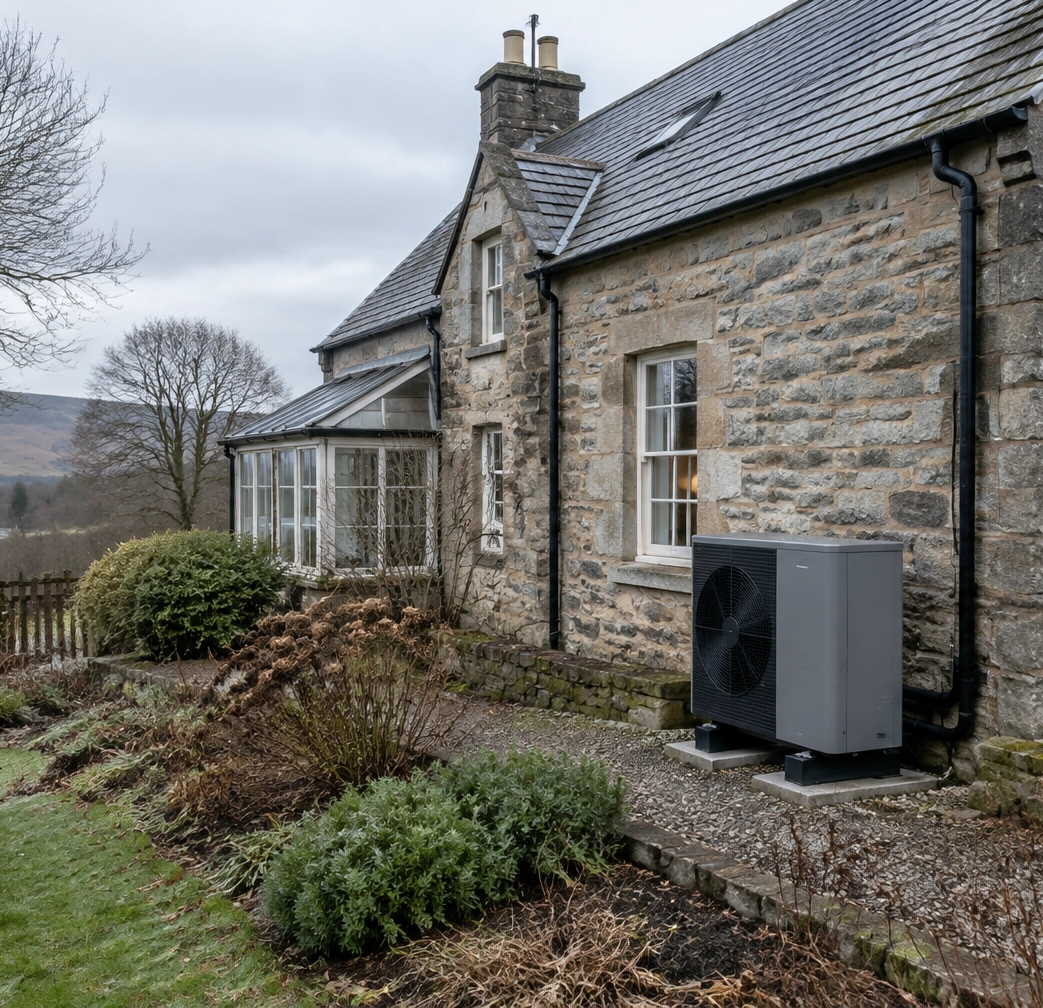
For households moving away from oil, LPG or direct electric heating, a heat pump may be worth assessing. Suitability depends on the property and its heating system, so it needs a proper assessment rather than a one-size-fits-all recommendation. If you are staying on mains gas, Herofix also provides boiler installation and servicing.
Herofix’s available grants and funding information covers its funded solar offer for eligible households where a resident is aged 65 or over, or a child under five lives in the home, and total household earnings are below £31,000. Scheme terms and eligibility should be checked before applying. The Warm Homes Loan Scheme may also be an option for larger energy-efficiency work.
There is currently 0% VAT on qualifying residential solar and battery installations until 31 March 2027. The rate is due to revert to 5% from 1 April 2027 unless extended. This is a timing consideration, not a promise of a particular saving: ask for a clear assessment and quote for your home.
FAQs
The price cap’s annualised figure for a typical dual-fuel household paying by Direct Debit rises from £1,723 to £2,166, an increase of about £443. It is a comparison based on typical use, not a forecast or cap on your personal bill.
Yes. The cap applies in Scotland, but electricity rates and standing charges vary by region. Check Ofgem’s regional table using your postcode.
The Scottish Government has confirmed an equivalent £100 payment, but eligibility, delivery and timing had not been finalised on 25 November. Details are expected in the Scottish Budget on 3 December. Do not assume the English rules apply.
Compare any offer with your current tariff using your own regional rates and expected usage. Check the contract length and exit fees, too. No one can guarantee future prices, and the forecast for the next cap is low confidence.
Solar panels can help generate electricity across the year, but generation is low in December and January. A new installation now will not meaningfully reduce the January bill.
Contact your supplier if you are struggling, and seek free independent advice from Home Energy Scotland or energyadvice.scot. You can also check current support and eligibility through the Scottish Government and Herofix’s grants information.
A cap is calculated using costs over a set period, so changes in wholesale prices do not necessarily show up immediately. Ofgem says the wholesale gas prices used for this cap rose during its assessment period. Network costs and environmental and social levies also affect the final figure.